Door Schedule Omissions as Post-Award Liability and the Bid-Stage Reconciliation Standard That Transfers Risk Back to the Process
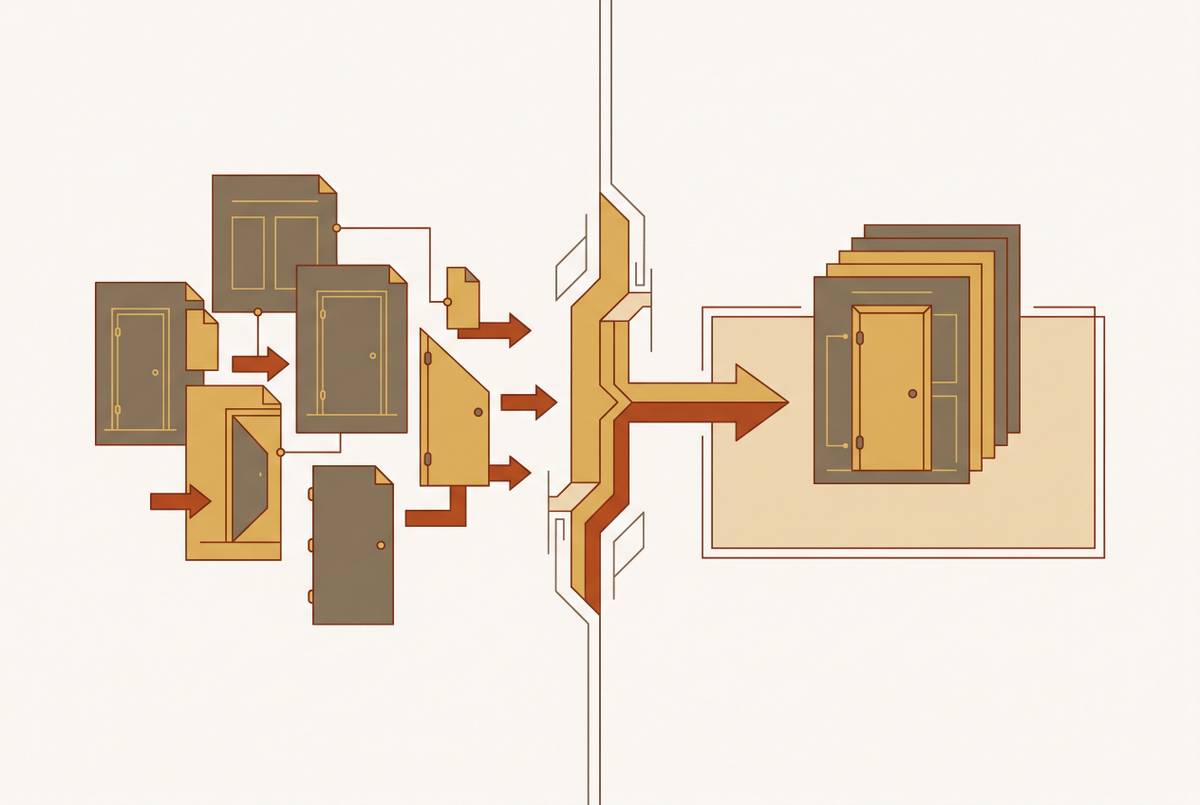
Simultaneous cross-document review catches door omissions before bid submission.
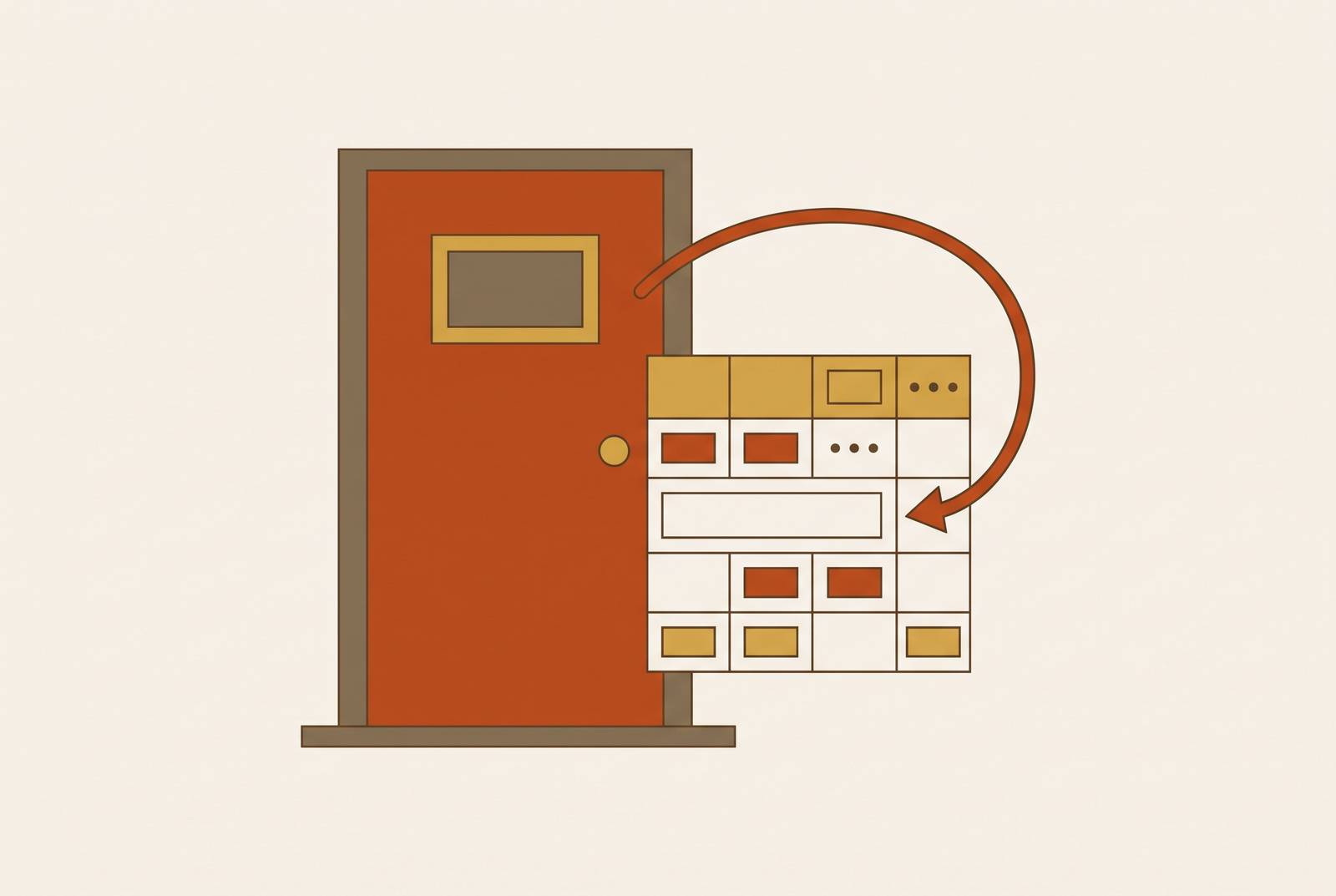
Door schedule omissions become post-award liability because the gap is priced and contracted before anyone confirms it exists. At bid stage, schedules, plans, and specs are read separately, so errors pass into the signed contract. The only reliable way to transfer that risk back to the process, rather than leaving it with the estimator, is to establish simultaneous, cross-document reconciliation as the professional standard of care for Division 8 takeoff.
Why door schedule omissions become post-award liability rather than pre-bid corrections
The door schedule is the bridge between architectural drawings and the hardware specification. When that bridge is incomplete, everyone downstream prices from a defective baseline. None of these gaps announces itself at bid time because the documents that would reveal the gap are never read together.
The remarks column is a chronic source of risk. Forgotten smoke seals on smoke or shaft doors cause smoke migration. If electrified hardware is specified without power transfers, with the wrong fail state, or without door-position switches, commissioning stalls. These are not exotic failures. They are the routine consequence of a document set that scatters critical data across files that no one reads in combination.
Once the contract is signed, the omission no longer belongs to the document set. It belongs to the contractor's scope and schedule. For pre-construction teams, the missing document details materialize as change orders, disputes with subcontractors, and margin erosion that no buyout strategy can fully recover.
How the document structure of a Division 8 set creates systematic omission exposure
Division 8 document sets distribute the information for a single opening across schedules, plans, elevations, partition schedules, and specifications authored independently. A complete picture of a single opening requires simultaneous data from the door schedule, which holds the ID, size, type, rating, and hardware group. The floor plan holds location, partition context, and clearances. The elevation holds swing, handing, and vision lite position. The 08 71 00 spec holds hardware set components and fire-rated group requirements. Division 1 holds scope resolution and precedence rules. No single document contains the full picture, and no sequential reading can assemble it.
A common pitfall in Division 8 specifications is treating doors, frames, and hardware as separate scopes of work when these components function as a single system. Every step in the ten-step workflow for a proper Division 8 takeoff pulls from a different document. An estimator must extract opening IDs from plans, assign sizes and door types, set fire and smoke ratings, define handing and swing, select hardware sets with complete component lists, add electrified hardware including lock type, power transfer, door-position switch, and request-to-exit, specify vision and glazing compatible with the rating, coordinate finishes, verify ADA and egress compliance, and coordinate power and controls with security and MEP trades. Each step pulls from a different document. Each document was authored by a different party with different assumptions.
You need cross-document reads to catch the two most common hard failures. Fire rating requirements compound the exposure: the five standard commercial ratings of 20, 45, 60, 90, and 180 minutes each impose specific requirements on door construction, frame preparation, hinge type, closing device, latching hardware, and seal package. The document structure makes that verification hard, which is why omissions survive to contract.
Where design-side and contractor-side liability diverge after an omission surfaces
Design-side and contractor-side liability follow different legal logic, and the contractor's exposure once the contract is signed is the harder of the two to escape. Design documents do not have to be perfect. The architect's standard of care, defined in AIA Document B101-2017, is professional skill and care ordinarily provided by architects practicing in the same or similar locality under the same or similar circumstances. But that liability is bounded by a negotiable professional standard.
The contractor-side standard is different in kind. The gap between design-side and contractor-side exposure is where unreconciled omissions settle: the architect may owe a revision, but the contractor already owns the schedule impact. But coverage depends on what the contractor documented and when, which returns the question to process.
How institutional owner standards make omission exposure materially worse on university and government healthcare jobs
Institutional owner standards impose division-of-labor and competition requirements, so if the document set is not reconciled before bid submission, you get uncovered scope and bid-qualification failures. The University of Kentucky Design and Construction Standards, revised September 2025, require that a minimum of three manufacturers be allowed to bid each specified item, and they prohibit proprietary specification of access control door hardware or mechanical door hardware. That requirement traps bids if a rep prices only a preferred line without reading the spec. Cornell University Section 087100 states that the Door Hardware Schedule must be organized into hardware sets that show complete designations for every item each door or opening requires, in the same order as the Door Hardware Sets at the end. Submittals that do not follow the same format and order will be rejected and subject to resubmission.
These are not isolated requirements. Each standard creates a distinct reconciliation obligation. USC's division-of-labor matrix requires cross-trade scope mapping. Kentucky's competition requirement demands spec-by-spec manufacturer verification. Cornell's submittal format requirement means the bid-stage hardware set structure has to mirror Part 3 exactly. Michigan DTMB's proximity and dealer requirements are bid-qualification gates, not scope items. A rep who treats an institutional job like a commercial one will price the wrong thing or fail qualification outright, and the failure will only surface after the bid is in.
What a bid-stage reconciliation standard actually requires, opening by opening
A defensible bid-stage reconciliation standard treats each opening as a complete package and documents every cross-document conflict before you submit the bid. This is not a clerical check. It is the primary liability-transfer mechanism available to the contractor. Each opening in a proper Division 8 takeoff is a package consisting of the door or window, frame, hardware, sealant, trim, and install labor, bundled per opening rather than as loose line items, then summarized as a Schedule of Values for the general contractor. For the hardware rep, the workflow is explicit. During the bid phase, the distributor receives the project specification and door schedule, prices the hardware package, and submits a bid. After contract award, the distributor prepares a detailed submittal that lists every hardware item for every door by hardware group. The liability accrues at the bid stage, not after award, when reconciliation was not performed.
The minimum reconciliation checklist for a single opening has nine distinct checks. The opening ID must be confirmed on the floor plan and in the schedule, with no orphaned IDs in either source. Check door size, type, and construction against the schedule and the elevation. Fire or smoke rating must be assigned and verified against frame prep, hinge type, closing device, latching hardware, and seal package in the hardware group. Confirm handing and active leaf, and check for a coordinator or astragal where paired leaves are involved. The hardware group must be assigned, with all components verified against the 08 71 00 spec including manufacturer, model, finish, and function. Electrified hardware must be checked for power transfer type, fail state, door-position switch, and request-to-exit, then cross-referenced with Division 28 or MEP scope assignments. The remarks column must be reviewed for special conditions such as silencers, specific hinge quantities, vision lite locations, and threshold types. ADA and egress compliance must be verified. Finally, a Division 1 conflict check must confirm that any requirement more stringent than the trade section is priced.
A pre-bid risk log serves two purposes. It documents the section and page where a risk appears, the nature of the risk, the dollar exposure, and the recommended action. It is both the pre-bid risk summary for leadership review and the starting point for subcontract scope packages, so risks flagged at spec review get addressed at buyout rather than six months later in a change order. This is not a quality-assurance audit performed after the takeoff is complete. It is the takeoff itself, performed cross-document from the first opening.
Why doing this reconciliation manually, document by document, makes the standard impossible to sustain under real bid conditions
You cannot sustain the cross-document standard manually, document by document, at the opening count and document volume typical of commercial Division 8 work. The standard exists on paper but collapses in practice. On a large commercial project, this is not a manageable manual workflow within a typical bid window.
The structural problem is that sequential document review creates the exact failure mode the standard is designed to prevent. Bid windows are fixed, but the document set is not. A manual process that takes the full available time has no capacity to absorb mid-process changes.
This is worth stating plainly. The consequence is not estimator failure. It is a process that structurally cannot produce the cross-document check the standard requires. Errors are not the fault of the people doing the work but of the manual, document-by-document process they have been forced to use.
How simultaneous, cross-document AI reconciliation makes the standard achievable and creates a documented liability record
Simultaneous cross-document reading, pulling data from door schedules, elevations, partition schedules, floor plans, and 08 71 00 specs at the same time, is the only process architecture that matches the cross-document dependency of a Division 8 opening. Sequential document review cannot replicate it regardless of estimator experience. Fresco is built exclusively for Division 8, covering doors, frames, and hardware, and automates the reconciliation of the full document set simultaneously. Conflicts between the schedule, plans, and spec are flagged at the opening level before bid submission rather than discovered in the field.
Fresco reads door schedules, elevations, partition schedules, floor plans, and 08 71 00 specs together. The takeoff it produces reflects cross-document reality rather than the contents of whichever file the estimator happened to open first. Because it is purpose-built for Division 8 rather than a general-purpose takeoff tool adapted to it, it understands the distinction between project specs and owner standards that institutional jobs require, including division-of-labor matrices and competition requirements that a general tool would treat as undifferentiated text. A takeoff that once required more than a day can be completed in under an hour, not as a tradeoff against accuracy but as a result of eliminating the document-switching overhead that manual sequential review imposes. Fresco's approach reflects the position that speed and accuracy are not opposed: AI reconciliation can be both faster and more precise than manual counts because it eliminates the class of errors produced by sequential document review, not by working faster through the same process.
Cross-document conflict detection addresses the specific failure mode in door schedule omission cases: the conflict that exists across documents but is invisible inside any single one. The documented conflict log serves a second function beyond accuracy. It is evidence that a systematic reconciliation was performed before bid submission, which is the strongest risk-transfer mechanism available to a Division 8 contractor or hardware rep under "readily inferable" contract language. Distributors and smaller operators who have historically lacked the estimating capacity of large contracting firms get the same reconciliation capability from a purpose-built AI platform. The standard becomes achievable across the market, not only at firms with large estimating departments.
What establishing this standard as professional practice means for how Division 8 contractors and reps approach every bid
Treating simultaneous cross-document reconciliation as the professional standard of care changes the Division 8 bid from a document extraction exercise into a documented risk assessment. A reconciliation standard defined at the bid stage shifts the question from "did we price what the schedule says?" to "did we reconcile what the schedule says against what the plans, elevations, and spec actually require?" The second question is the one that matters post-award. Contractors and reps who can answer it with a documented record are in a materially different legal and commercial position from those who cannot. The risk has transferred from their judgment to their process.
Bidding volume is the competitive lever in Division 8. Estimators and owners who win more bids win because they can quote more jobs, not because they work longer hours. For institutional work, the university, government healthcare, and public agency jobs where owner standards are most prescriptive and omission penalties most severe, the standard is not optional. It is the minimum required to submit a defensible bid. The alternative is not the status quo. It is accepting that post-award liability for omissions is a structural feature of the business rather than a process problem with a solution.